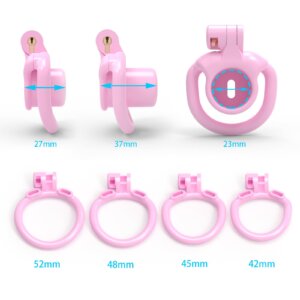


Many people first discover chastity through someone else’s story.
It might be a blog post, a forum discussion, a fictional narrative, or a fantasy scenario that sparks curiosity. Reading about another person’s experience can be exciting, but eventually many practitioners reach a different stage.
Instead of asking:
“What would it be like to live that fantasy?”
They begin asking:
“What would my fantasy look like?”
This shift changes everything.
The most engaging chastity fantasies are rarely copied from someone else’s journey. They become personal narratives shaped by individual motivations, values, interests, and long-term goals.
Whether you’re interested in male chastity fantasy, self-development, relationship dynamics, or creative storytelling, building your own fantasy framework can make the experience feel far more immersive and meaningful.
Why Creating Your Own Fantasy Feels Different From Reading Someone Else’s
Most people begin as observers.
Eventually, some become authors of their own experience.
That transition often marks the point where curiosity becomes genuine emotional investment.
Passive Consumption Versus Active Participation
Reading a fantasy allows you to observe someone else’s world.
Creating your own fantasy requires participation.
Instead of following a predefined storyline, you begin making choices that influence how the narrative develops. The experience becomes more personal because every challenge, decision, and milestone belongs to you.
Many practitioners discover this shift while progressing through a broader stage-by-stage chastity journey, where personal meaning gradually becomes more important than novelty.
Why Personal Fantasies Feel More Immersive
People tend to connect more strongly with stories that reflect their own interests.
A fantasy focused on devotion feels different from one focused on discipline.
A fantasy centered on transformation feels different from one centered on achievement.
The more closely a narrative reflects your existing motivations, the easier it becomes to remain emotionally engaged with it over time.
Turning Curiosity Into Creativity
Curiosity sparks imagination.
Creativity gives that imagination structure.
Fantasy building allows you to move beyond consuming content and begin creating an experience that reflects your own perspective, goals, and interests.
Step 1 — Choose the Fantasy Theme That Resonates With You
Every compelling story begins with a central theme.
Your fantasy should be built around the ideas that genuinely interest you.
Discipline Fantasy
Some people are drawn to themes of patience, consistency, and self-control.
Their fantasy is less about restriction and more about developing qualities they admire.
The narrative becomes a story of gradual personal improvement.
Devotion Fantasy
Others find meaning in commitment.
Their fantasy may revolve around loyalty, trust, service, dedication, or emotional connection.
The focus shifts toward what they are devoted to rather than what they are avoiding.
Transformation Fantasy
Transformation stories remain popular because they emphasize growth.
The fantasy becomes a narrative about becoming more focused, more disciplined, more confident, or more self-aware over time.
Challenge Fantasy
Some people simply enjoy pursuing difficult goals.
Milestones, achievements, and long-term objectives become the driving force behind the story.
Many beginners start exploring these ideas through structured beginner challenges before developing larger fantasy frameworks.
Step 2 — Create Your Fantasy Character
Every memorable story needs a protagonist.
In this case, that protagonist is you.
Define Your Role
Ask yourself:
Who am I within this narrative?
Possible roles might include:
- A dedicated trainee
- A patient learner
- A determined challenger
- A devoted partner
- A disciplined practitioner
The specific role matters less than the direction it provides.
Define Your Motivations
Why does this story matter?
Motivation gives meaning to the narrative.
Possible motivations include:
- Personal growth
- Self-discipline
- Relationship goals
- Curiosity
- Long-term development
The clearer the motivation, the easier it becomes to maintain engagement.
Define Your Long-Term Objective
Stories move forward because characters have destinations.
Your objective does not need to be dramatic.
A simple, realistic goal often creates a stronger foundation than an ambitious one that quickly becomes overwhelming.
Step 3 — Build a Chastity World Around the Story
Stories become immersive when they contain structure and meaning.
Fortunately, this does not require elaborate roleplay.
Create the Rules of Your World
Every fictional world operates according to certain assumptions.
Ask yourself:
- What values matter most?
- What behaviors support the story?
- What principles guide decisions?
These elements create consistency and help the narrative feel coherent.
Add Symbols That Carry Meaning
Symbols often make stories feel real.
A journal.
A calendar.
A written commitment.
A key.
A device.
The object itself matters less than what it represents.
Many practitioners find that a well-fitted chastity cage eventually becomes more symbolic than physical, representing commitment to a larger personal narrative.
Create Chapters Instead of Deadlines
Stories progress through chapters.
Not deadlines.
Viewing milestones as chapters encourages curiosity and growth rather than pressure and perfectionism.
Step 4 — Use Chastity Journaling as Storytelling
Most people think of journaling as record keeping.
It can be much more powerful than that.
Write Like a Narrator
Instead of simply recording events, try documenting experiences as part of an evolving story.
What changed today?
What surprised you?
What challenge felt meaningful?
This approach often makes journaling feel more engaging.
Record Character Development
Good stories involve growth.
Your journal can help identify how your mindset, habits, and motivations evolve over time.
This process transforms isolated experiences into a continuous narrative.
Capture Turning Points
Stories are remembered because of key moments.
A realization.
A breakthrough.
A setback.
A new goal.
Documenting these moments helps create a richer and more meaningful record of your journey.
Step 5 — Let Fantasy and Reality Influence Each Other
The most sustainable fantasies remain connected to real life.
Fantasy should enrich reality rather than replace it.
Bring Small Elements Into Daily Life
Fantasy becomes more meaningful when small parts of it influence everyday habits.
Examples might include:
- Reflection practices
- Goal reviews
- Personal rituals
- Progress tracking
Small actions often create stronger long-term engagement than dramatic gestures.
Keep Expectations Flexible
Stories evolve.
People evolve.
Allowing your fantasy framework to change prevents it from becoming restrictive or repetitive.
Let the Story Grow With You
The most rewarding narratives are rarely static.
New interests emerge.
Goals change.
Priorities shift.
Allowing the story to adapt keeps it relevant and engaging.
Many long-term practitioners eventually transition toward durable metal chastity cages not because the device itself matters more, but because their narrative has evolved toward consistency and long-term commitment.
Common Fantasy Building Mistakes
Even creative narratives can lose momentum when approached incorrectly.
Copying Someone Else’s Story
Inspiration is valuable.
Replication is limiting.
The most meaningful fantasy reflects your own motivations rather than someone else’s preferences.
Making Everything Too Rigid
Stories need flexibility.
When every detail is predetermined, the narrative often loses its sense of discovery.
Obsessing Over the Ending
Many people focus entirely on outcomes.
Great stories remain engaging because of the journey itself.
The process matters just as much as the destination.
People who feel stuck often benefit from revisiting simple fantasy-building exercises that restore curiosity and momentum.
What Long-Term Practitioners Often Discover
As time passes, many participants notice several recurring patterns.
Stories Create Meaning
Experiences become more memorable when they fit into a larger narrative.
Meaning often emerges from context rather than individual events.
Reflection Reveals Patterns
Journaling frequently highlights patterns that would otherwise go unnoticed.
Awareness creates opportunities for growth.
Identity Influences Commitment
People tend to remain consistent when their actions align with how they view themselves.
Stories reinforce identity, and identity reinforces behavior.
Fantasy Becomes Increasingly Personal
Over time, many practitioners discover that their fantasy reflects their own values more than any external influence.
This personalization often becomes one of the most rewarding aspects of the experience.
Many people notice this transformation while moving through a long-term chastity progression that gradually shifts from curiosity to personal meaning.
FAQs
What is a chastity fantasy?
A chastity fantasy is a personal narrative built around themes such as anticipation, discipline, commitment, identity, or self-development.
Why does male chastity fantasy feel so personal?
Because it often combines imagination, motivation, identity, and personal goals into a highly individualized experience.
What is fantasy building?
Fantasy building is the process of creating a structured narrative, complete with themes, goals, symbols, milestones, and personal meaning.
Is chastity journaling useful?
Many people find journaling valuable because it helps document growth, reinforce motivation, and transform experiences into a coherent story.
Can fantasies evolve over time?
Absolutely. Most long-term practitioners find that their interests, goals, and narratives naturally evolve as they gain experience.
Do I need a partner to create a chastity fantasy?
No. Many people build meaningful fantasy frameworks as solo practitioners through journaling, reflection, and personal challenges.
Final Thoughts
Every long-term chastity journey eventually becomes a story.
Not necessarily a story written for others, but one that helps explain what motivates you, what challenges you, and what gives the experience meaning.
The most compelling chastity fantasies are rarely copies of someone else’s narrative. They emerge from personal interests, values, goals, and imagination.
Through fantasy building, chastity journaling, and thoughtful reflection, curiosity gradually becomes creativity. And over time, that creativity can evolve into a story that feels uniquely your own.