
For many people, one of the most intriguing aspects of chastity isn’t the device itself—it’s the psychological experience surrounding it.
Discussions about mind control chastity often appear in fantasies, stories, and roleplay scenarios. Yet despite the dramatic language, most people aren’t actually interested in surrendering real-world autonomy. What they enjoy is the feeling of immersion, symbolism, and emotional investment.
This distinction is important.
The appeal of mind control themes in chastity usually comes from imagination rather than literal control. It allows participants to explore ideas of surrender, obedience, guidance, and power exchange within a consensual framework that remains rooted in trust and communication.
Whether you’re curious about chastity fantasy, symbolic authority, or the psychology behind power exchange, understanding why these themes feel compelling can help you approach them more thoughtfully.
Why Mind Control Chastity Fantasies Feel So Powerful
Many newcomers assume the appeal comes from control itself.
In reality, the appeal often comes from what control represents.
The Difference Between Fantasy and Reality
Fantasy allows people to explore experiences that may never be desirable in real life.
Someone might enjoy reading about a fictional villain controlling minds without wanting that experience outside the story.
The same principle applies to many chastity fantasies.
The fantasy creates emotional engagement because it allows people to temporarily step into a different role, mindset, or identity.
Why Structure Feels Emotionally Appealing
Many people find comfort in clear expectations.
A defined role can reduce uncertainty and create a sense of purpose.
This doesn’t necessarily mean someone wants to be controlled.
Often, they simply enjoy temporarily stepping away from decision-making and immersing themselves in a structured experience.
The Appeal of Psychological Control
Unlike physical restriction, psychological control focuses on meaning.
A rule only matters when someone believes it matters.
A role only feels real when someone emotionally invests in it.
The most immersive fantasies often work because participants voluntarily give those symbols emotional significance.
Many people first encounter these themes while exploring a broader male chastity play framework, where emotional and psychological dynamics become increasingly important over time.
Understanding Symbolic Control in Chastity
One reason mind control themes appear so frequently in chastity is that human beings naturally respond to symbols.
The influence comes less from physical force and more from the meaning attached to an object, role, or agreement.
Why Symbols Carry Meaning
Consider a wedding ring.
A wedding ring is simply a small piece of metal.
It doesn’t physically force loyalty, commitment, or responsibility.
Yet millions of people view it as a powerful symbol of their relationship.
The ring influences behavior because of what it represents.
Many forms of symbolic control work in a similar way.
The object itself has limited power.
The meaning attached to it creates the psychological impact.
The Difference Between Authority and Symbolic Authority
Another useful example is a uniform.
A military uniform, police uniform, or doctor’s coat does not magically create authority.
However, people often behave differently when wearing one because the uniform represents a specific role and identity.
Others respond differently as well.
The symbolic meaning changes expectations and behavior.
In many chastity roleplay scenarios, titles, rituals, or devices function similarly. Their influence comes from shared understanding rather than physical force.
How Symbolic Control Shapes Behavior
People constantly respond to symbolic systems.
Badges.
Ranks.
Titles.
Achievements.
Social roles.
These symbols help shape behavior because they carry psychological meaning.
Chastity fantasies often use the same mechanism. The device, key, title, or ritual becomes meaningful because participants agree that it represents something larger than itself.
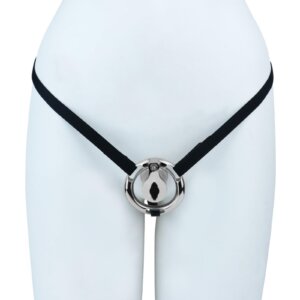
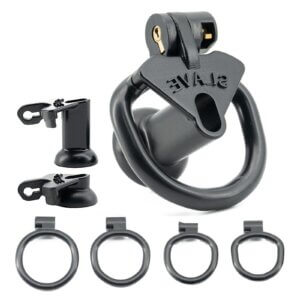
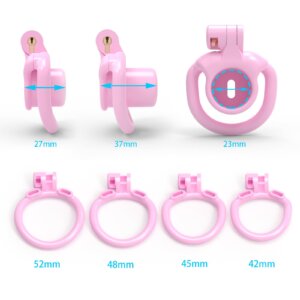
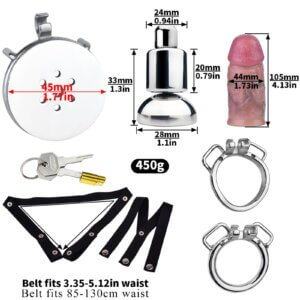
For many practitioners, a comfortable chastity cage for daily wear eventually becomes less important as an object and more important as a symbol of commitment, participation, or identity.
Mind Control Chastity as a Fantasy Framework
For many people, mind control themes are best understood as storytelling tools.
They provide a framework for imagination rather than a literal goal.
Creating a Chastity Fantasy Narrative
Stories help people create meaning.
A fantasy may include themes such as:
- Obedience
- Guidance
- Transformation
- Devotion
- Surrender
These themes become engaging because they create a narrative rather than simply a rule.
Roleplay and Imagination
Roleplay allows people to explore different identities.
Someone who spends most of their life making decisions may enjoy temporarily playing a more submissive role.
Likewise, someone who enjoys leadership may enjoy taking on a more directive role.
Roleplay creates space for exploration without requiring permanent change.
Why Fantasy Can Feel More Immersive Than Reality
Reality often contains practical limitations.
Fantasy does not.
This freedom allows people to explore emotional experiences in a highly focused way.
Many participants discover that the emotional intensity comes from imagination rather than physical circumstances.
People who are new to these concepts often benefit from experimenting with beginner-friendly chastity challenges before introducing more elaborate fantasy elements.
The Power Exchange Mindset
Power exchange themes frequently overlap with mind control fantasies.
However, the psychology behind them is often misunderstood.
Voluntary Surrender Versus Actual Control
The most important distinction is choice.
Healthy power exchange begins with voluntary participation.
The individual chooses to engage with the dynamic.
That choice remains central even when the fantasy involves surrender.
Identity and Role Adoption
People naturally adapt to roles.
Students behave differently than teachers.
Managers behave differently than employees.
Parents behave differently than children.
Role adoption influences thoughts, emotions, and behavior.
Many power exchange mindsets use this same psychological process.
Emotional Investment in Power Exchange
The more emotionally meaningful a role becomes, the more immersive it often feels.
This emotional investment explains why simple symbols can sometimes feel surprisingly powerful.
Many long-term practitioners eventually choose a metal chastity cage for extended wear because the psychological meaning of the dynamic becomes more important than experimenting with different devices.
Everyday Examples of Symbolic Control
Mind control themes may sound unusual, but the underlying psychology is surprisingly common.
Rituals as Psychological Anchors
Morning routines.
Religious practices.
Sports traditions.
Many rituals help create consistency and meaning.
The ritual itself may be simple, but repeating it reinforces its significance.
Language and Titles
Titles influence perception.
Words such as:
- Coach
- Captain
- Teacher
- Doctor
carry psychological weight because people associate them with specific roles.
Many chastity dynamics use titles for similar reasons.
Personal Symbols and Reminders
A ring.
A bracelet.
A key.
A photograph.
Objects often gain emotional significance through personal meaning rather than physical value.
Many people discover this symbolic aspect while progressing through a long-term chastity journey that gradually becomes more psychological than physical.
Exploring Mind Control Themes Safely
Fantasy works best when it remains grounded in communication and consent.
Maintaining Reality Awareness
Fantasy should enhance reality, not replace it.
Understanding the difference helps keep experiences healthy and enjoyable.
Communication and Consent
Clear communication creates trust.
Trust allows people to explore fantasy themes without confusion or misunderstanding.
Adapting Fantasies Over Time
Interests evolve.
What feels exciting today may change in the future.
Healthy dynamics allow room for growth and adaptation.
People who find themselves becoming too focused on complexity often benefit from revisiting simple structured challenges that keep the experience grounded and enjoyable.
Common Misunderstandings About Psychological Control
Even experienced practitioners sometimes misunderstand how symbolic and psychological dynamics work.
Fantasy Is Not Manipulation
Fantasy involves imagination and consent.
Manipulation removes choice.
The two should never be confused.
Symbolic Control Is Not Dependency
Finding meaning in a symbol is different from becoming dependent on it.
Healthy dynamics remain flexible and balanced.
Why Consent Remains Central
No matter how immersive a fantasy becomes, consent remains the foundation.
Without consent, the experience stops being fantasy and becomes something entirely different.
FAQs
What is mind control chastity?
Mind control chastity refers to fantasies or roleplay themes that explore psychological influence, symbolic authority, and power exchange within a consensual chastity context.
Is mind control chastity about actual control?
No. Most people use the term to describe a fantasy framework rather than a desire for literal control.
What is symbolic control?
Symbolic control occurs when an object, role, title, or ritual influences behavior because of its emotional or psychological meaning.
Why do people enjoy chastity fantasy?
Many people enjoy exploring identity, anticipation, roleplay, and emotional immersion through fantasy.
Is power exchange the same as mind control?
Not necessarily. Power exchange focuses on voluntary role dynamics, while mind control themes are often symbolic or fantasy-based.
Can these themes be explored safely?
Yes. Communication, consent, and mutual understanding help ensure that fantasy remains enjoyable and healthy.
Final Thoughts
The appeal of mind control chastity rarely comes from control itself.
More often, it comes from symbolism, imagination, and emotional investment.
Wedding rings, uniforms, titles, and rituals all demonstrate how meaning can influence behavior in everyday life. Chastity fantasies use many of the same psychological mechanisms, transforming ordinary objects and agreements into something emotionally significant.
When approached thoughtfully, psychological control, symbolic control, and power exchange mindsets can become powerful storytelling tools that deepen immersion while remaining firmly grounded in consent, communication, and shared understanding.
Ultimately, the most compelling fantasies are not about losing control—they are about voluntarily giving meaning to a role, a symbol, or a shared experience.