On TikTok, NNN usually means No Nut November: an internet challenge associated with avoiding orgasm during November. The acronym may appear in explainers, jokes about “failing,” progress videos, reaction clips, or recycled memes that return at the start of the month.
The basic definition is simple. The more interesting question is why the same trend can feel new every year. TikTok combines a predictable seasonal cue with highly reusable video formats, searchable tags, and a recommendation system that can rapidly amplify interest-aligned content.
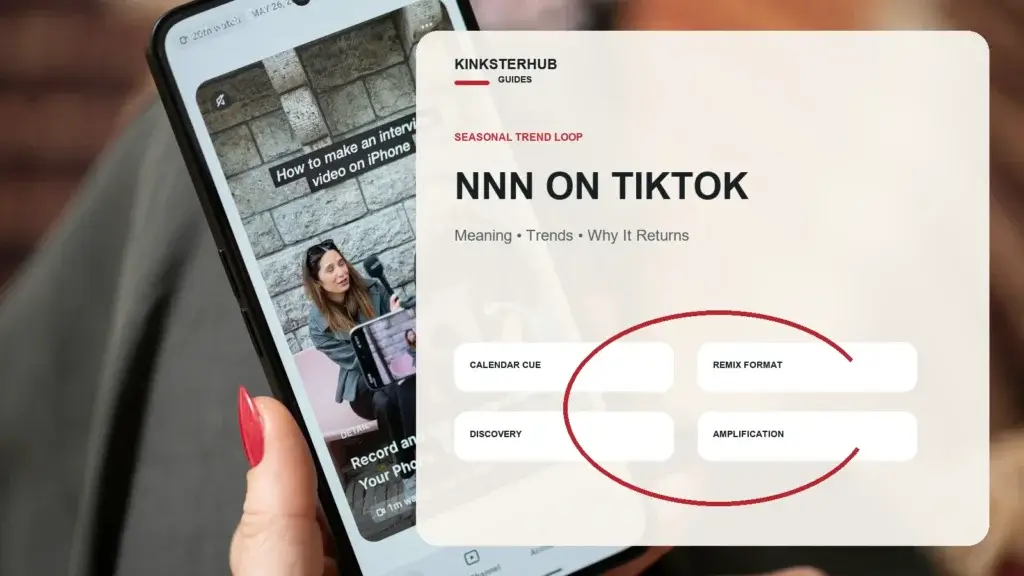
The four-part TikTok revival loop
1. The calendar supplies the trigger. Creators do not need to invent a launch moment. November 1 gives everyone the same prompt.
2. Old formats are easy to remake. A reaction sound, stitched video, countdown, or “Day X” caption can be adapted without retelling the whole history.
3. Acronyms and hashtags gather the conversation. NNN, NoNutNovember, and related phrases let users search, label, and recognize connected posts. Hashtag counts are volatile and platform-dependent, so they should not be treated as stable participation totals.
4. Recommendations amplify demonstrated interest. Research on TikTok describes how watch behavior, interaction, and interest alignment shape exposure. A 2026 study of algorithmic amplification found that stronger interest-aligned amplification can coincide with lower hashtag diversity. That does not prove TikTok causes NNN to return, but it helps explain why a seasonal topic can quickly dominate an interested user’s feed.
Why the same videos come back
A Reddit discussion around a TikTok clip included viewers saying they looked forward to the same video every year. That is a useful cultural clue: recurring content can become part of the ritual. Users are not only discovering NNN; they are revisiting a familiar seasonal performance.
This repetition also reduces context. A clip may assume viewers already know the rules, or it may intentionally exaggerate them for humor. New viewers can encounter the punchline before the definition and mistake irony for instruction.
How misinformation enters the trend
Short video rewards compression. A confident claim about testosterone, “superpowers,” masculinity, or guaranteed self-improvement is easier to package than a nuanced explanation of limited evidence. Repetition can make a claim feel established even when every video traces back to the same unsupported idea.
Separate three kinds of content: a joke does not need to be factual; a personal story describes one person’s experience; a health claim needs appropriate evidence. Do not use views, likes, or repetition as substitutes for evidence.
A quick verification checklist
- Is the clip explaining slang, sharing an experience, or making a factual claim?
- Does it link to an original source?
- Is the source qualified for the claim?
- Could the clip be satire or a recycled format?
- Does another reliable source support the conclusion?
Use TikTok to observe how a culture talks. Use the NNN health claims fact check for medical questions, and the No Nut November rules and exceptions for definitions. That keeps a platform trend from becoming an accidental health manual.