

Your first Locktober is not dangerous because you are not committed enough. It is dangerous because you may be too eager to fully commit before you have tested your body, schedule, privacy, and limits. Every year, new participants get swept up in countdown posts, cage photos, rule lists, and keyholder fantasies. Then the quiet question appears: am I supposed to promise all thirty-one days right away?
No. Your first Locktober does not have to be a full-month endurance test. It can be a structured experiment. It can be three days, seven days, fourteen days, or a symbolic version that teaches you what chastity means in practice before you try anything more demanding.
This article treats Locktober as kink, not as a medical or moral challenge. If you use a chastity device, pain, numbness, swelling, discoloration, skin injury, urinary issues, coldness, or panic are stop signals. Remove the device, reassess the fit, and do not treat health problems as proof of commitment. Keep emergency access available. Unlocking for hygiene, inspection, or discomfort is responsible practice.
If the term itself is new, first read what Locktober means. If the full month feels too large, compare short and full-length Locktober options before making a promise.
The First Locktober Feeling: Excited, Nervous, and Not Fully Ready
Why First-Timers Often Overpromise
Beginners often make one mistake before the challenge starts: they make a fantasy promise instead of a practical plan. A fantasy promise sounds like, “I will stay locked all month, no exceptions.” A practical plan sounds like, “I will try a seven-day starter version with scheduled hygiene checks, a comfort review every evening, and an emergency unlock rule.”
The fantasy promise feels more dramatic, but the practical plan is more likely to survive ordinary life. Locktober happens during workdays, sleep, exercise, family schedules, privacy constraints, and unpredictable body responses. A person may feel ready while scrolling at night, then discover on day three that the device rubs, the rules feel vague, or the emotional pressure is heavier than expected.
First-time enthusiasm needs a container. The goal is not to kill the excitement. The goal is to protect it from becoming a burden.
The Gap Between Fantasy and Daily Life
Chastity fantasies compress time. They focus on the charged moment: the lock closing, the keyholder smiling, the countdown beginning, the feeling of being denied. Locktober stretches that fantasy across a whole month, and real life does not behave like a caption.
Daily life brings sweat, bathroom routines, sleep interruptions, errands, workouts, social plans, and privacy concerns. If you live with roommates, travel for work, exercise often, or have limited private space, your plan needs to account for that.
Before you begin, ask three grounded questions: Where will I keep emergency access and any cleaning supplies and a reliable emergency key needed for cleaning, storage, or unlocking? When will I clean and inspect? What is my stop condition? If you cannot answer those questions clearly, you are not ready for a full challenge yet. You can still participate, but choose a lower-intensity version.
Core takeaway: Your first Locktober should be designed around the life you actually have, not the fantasy version of yourself who never sweats, sleeps, panics, travels, or changes their mind.
You Do Not Have to Commit to 31 Days on Day One
The 3-Day Test for Curious Beginners
A three-day Locktober test is ideal if you are curious but unsure, and low-stress chastity challenges can help you choose a softer starting format. It gives you enough time to experience anticipation, restriction, and routine without turning the entire month into a high-pressure promise.
For a device-based version, the three-day test might include short wear sessions, comfort checks, cleaning breaks, and an evening journal. For a non-device version, it might include orgasm denial, fantasy journaling, or avoiding a specific habit for three days.
The three-day version should still feel real. Write your rules. Set a start and end time. Decide what you are tracking. At the end, review what happened. Did it feel exciting, stressful, boring, empowering, awkward, or surprisingly emotional?
The 7-Day Beginner Path and 14-Day Reset Path
The seven-day path is the best default for many first-timers. It is long enough to create rhythm but short enough to review before pressure builds. A seven-day beginner path can be simple: one safety rule, one accountability rule, and one anticipation rule.
Your safety rule might be: I will unlock for cleaning and stop immediately if I feel pain or numbness. Your accountability rule might be: I will write one evening reflection each day. Your anticipation rule might be: I will avoid orgasm until my weekly review.
The fourteen-day reset path works for people who finish the first week and want to continue without jumping straight into a full month. It can also work for someone who starts late. Treat day seven as a real review point, not a decorative milestone.
Core takeaway: Start with a version you can review. Three days teaches curiosity. Seven days teaches rhythm. Fourteen days tests sustainability. Thirty-one days should be earned by fit, privacy, communication, and safety, not assumed on day one.
Build a Locktober Plan Around Your Real Life
Privacy, Work, Sleep, Exercise, and Hygiene
A first Locktober plan should be designed around your actual life. If you work long shifts, your cleaning schedule needs to reflect that. If you exercise, you need to know whether device wear is safe and comfortable during movement. If you sleep poorly in a cage, you may need a daytime-only version. If privacy is limited, symbolic denial may be safer than device wear.
Do not copy someone else’s setup without asking whether their body, schedule, relationship, and experience level match yours. A long-term wearer may have routines that are not appropriate for a first-timer. A couple with years of communication may use rules that would feel risky in a new dynamic.
Build from constraints outward: safety, privacy, time, motivation, then erotic tasks. This order keeps the challenge from becoming a beautiful plan that fails on day two.
Your First Written Rule Set
Your written rule set does not need to be long. In fact, short is usually better for a first Locktober. Try five lines: duration, allowed unlocks, stop conditions, daily check-in, and end review. Use the Locktober rules guide as a menu, then place the chosen rules and review points into your challenge calendar.
Example: I am doing a seven-day first Locktober. I may unlock for hygiene, pain, skin checks, or emergencies. I will not treat health breaks as failure. I will write a short reflection each night. On day seven, I will decide whether to stop, repeat, or extend.
Once the basic rules feel clear, turn them into a routine you can repeat, review, and adjust without making the month feel heavier than it needs to be.
If you want concrete activities to place inside that routine, choose a few beginner chastity tasks that fit your schedule and keep the same safety and stop conditions.
Core takeaway: A short written rule set is not less serious. It is easier to follow, easier to review, and harder to twist into shame.
Safety, Fit, and the Body Stuff Nobody Wants to Admit
Health and Comfort Override the Challenge
A Locktober rule should never outrank your body. Stop immediately for pain, numbness, coldness, discoloration, swelling, skin breakdown, urinary trouble, or persistent anxiety. If you use a device, check fit and hygiene regularly. If you are unsure whether a symptom is normal, remove the device and seek appropriate professional advice.
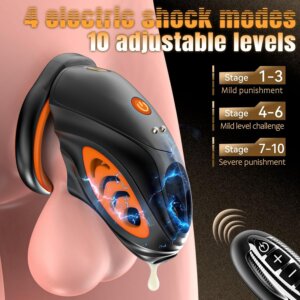
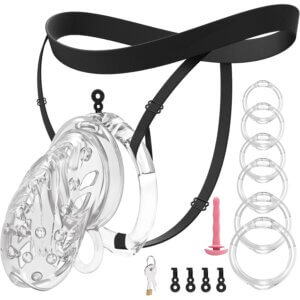
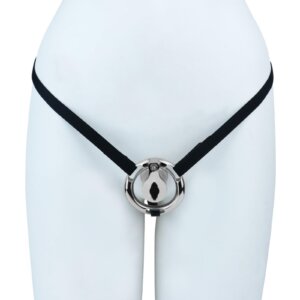
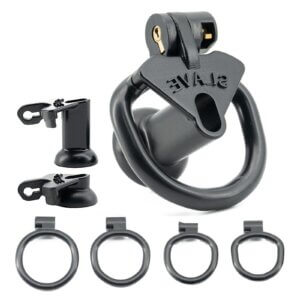
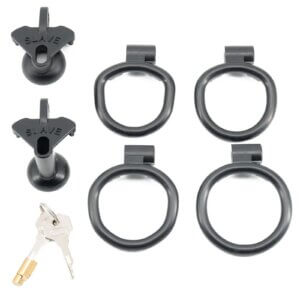
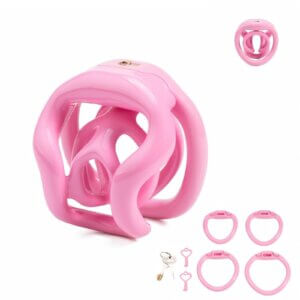
Material matters. For beginners, medical-grade 316L stainless steel or clearly labeled biocompatible resin is a safer starting point than mystery alloy, rough edges, cheap porous material, or nickel-heavy metal. Before October, test the device in short sessions and, only if those go well, try an overnight test. Do not make the first night of Locktober your first real fit test.
Comfort does not mean the challenge has no edge. Chastity can feel restrictive, frustrating, exciting, or mentally intense. But erotic frustration is not the same as harm.
Morning Size, Night Erections, and No-Shame Adjustments
If you wake up with discomfort, do not spiral into shame. Nighttime penile tumescence is a normal physiological process. Your body can have erections during sleep whether your mind feels horny, disciplined, obedient, embarrassed, or completely checked out.
Pain during morning or overnight erections usually means something practical: the base ring may be too small, the cage may be too short, the device angle may be wrong, or overnight wear may be too advanced for your first attempt. Adjusting the plan is not weakness. It is fit data.
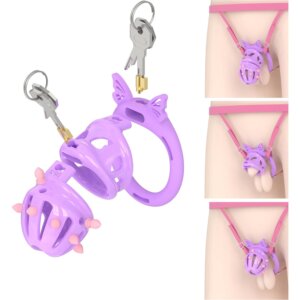
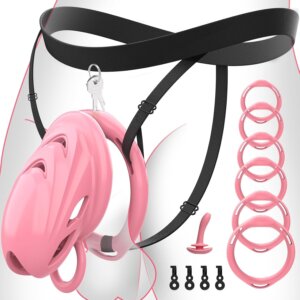
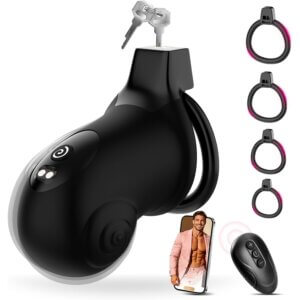
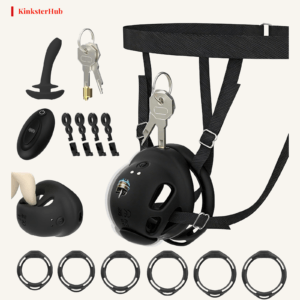
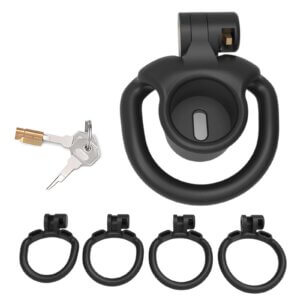
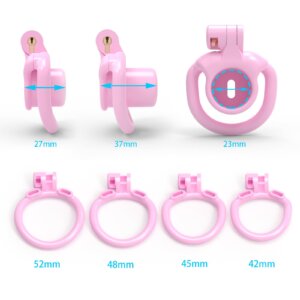
A chastity cage sizing guide can help you check fit before continuing.
Core takeaway: Do not turn body signals into moral drama. Morning discomfort is not proof that you failed. It is information about sizing, timing, and whether your plan needs a safer version.
What to Do When You Want to Quit, Pause, or Reset
Reset Is Not Failure
Stopping for health reasons is not losing. Pausing because a rule was too intense is not losing. Real kink requires the ability to notice when something is not working and change course before harm appears.
If you pause, write down why. Was the chastity device uncomfortable? Were the rules unclear? Was the emotional pressure too high? Did privacy become a problem? Did solo participation feel too easy or too lonely?
A reset becomes useful when it teaches you what to change next time. It becomes useless only when you turn it into a shame spiral.
If a Partner or Keyholder Is Involved
If a partner or keyholder is involved, they should support health-first rules. A trustworthy keyholder does not mock safety concerns or push past agreed limits. Their role is to help create structure, anticipation, and trust, not to override the wearer’s body.
Use plain stop language. Decide in advance what “pause,” “unlock,” and “reset” mean. If the words are vague, people will improvise under stress. That is not romantic. That is how preventable conflict happens.
Core takeaway: A good reset makes the plan clearer. It should not automatically make the rules harsher.
A Beginner Locktober Template You Can Actually Follow
Morning Check-In, Evening Reflection, Weekly Review
A simple daily rhythm can make your first Locktober easier. In the morning, check your body and restate the day’s rule. In the evening, reflect on what happened. At the end of the week, review whether to stop, repeat, lower intensity, or extend.
Morning check-in:
Is my body comfortable?
Do I understand today’s rule?
Do I still consent to this plan?
Evening reflection:
What felt good?
What felt difficult?
What needs adjustment?
Weekly review:
Is this still safe?
Is this still meaningful?
Is this still sustainable?
What to Track Without Becoming Obsessive
Track information that helps you make better decisions: comfort, mood, rule clarity, hygiene, sleep, motivation, and emotional pressure. Obsessive counting, comparison, or shame-based tracking is less useful.
For a first attempt, use simple ratings: body comfort from 1 to 5, emotional pressure from 1 to 5, motivation from 1 to 5. If any number moves in a concerning direction for two days, review the plan.
You can also track erotic positives. What created anticipation? What made the challenge feel intimate or exciting? What rule gave the most structure with the least stress?
Core takeaway: Tracking should turn the challenge into care, not surveillance.
Your First Locktober Aftercare and Reflection
What Did You Learn About Desire, Control, and Limits?
The end of a first Locktober should not be treated as pass/fail. It should be treated as aftercare and reflection. You explored a charged practice. You may have learned something about desire, control, patience, frustration, communication, or your body’s limits.
If you finished the plan, ask what made it work: structure, partner involvement, daily reflections, time limits, or device fit. If you stopped early, ask what the stop taught you: better sizing, simpler rules, more privacy, or shorter duration.
Reflection also protects future play. Without it, people often escalate simply because the month ended. They move from Locktober to No Nut November or longer denial without checking whether they actually want that.
Continue, Stop, or Redesign?
At the end, you have three good options. Continue only if the experience was safe, consensual, genuinely desired, and supported by comfortable chastity cages that match your real fit data. Stop if the challenge gave you what you needed or if you want to return to normal. Redesign if parts worked but the structure needs adjustment.
Your first Locktober is successful if it teaches you how to practice chastity with more honesty. Completion is one metric. Learning your limits is another. Building a safer plan is another. Choosing to stop can also be a successful outcome.
Core takeaway: The best first Locktober is not the one that looks most extreme online. It is the one you can look back on without injury, coercion, secrecy, or avoidable shame.
Copy This: 7-Day Safety Trial Commitment
I, ______, choose a 7-day first Locktober trial.
My daily body check times are ______ and ______.
My allowed unlocks are hygiene, skin inspection, pain, numbness, urinary trouble, panic, or emergency.
My one safety rule is: ______.
My one accountability rule is: ______.
My one anticipation rule is: ______.
If I notice ______, I will pause immediately. This does not count as failure.
On day seven, I will choose one:
[ ] Stop and reflect.
[ ] Repeat the same 7-day level.
[ ] Lower the intensity.
[ ] Carefully extend after review.
If you cannot fill this out clearly, your first Locktober task is planning, not locking.