
The Key Was There When She Came Back
He saw it before she said a word.
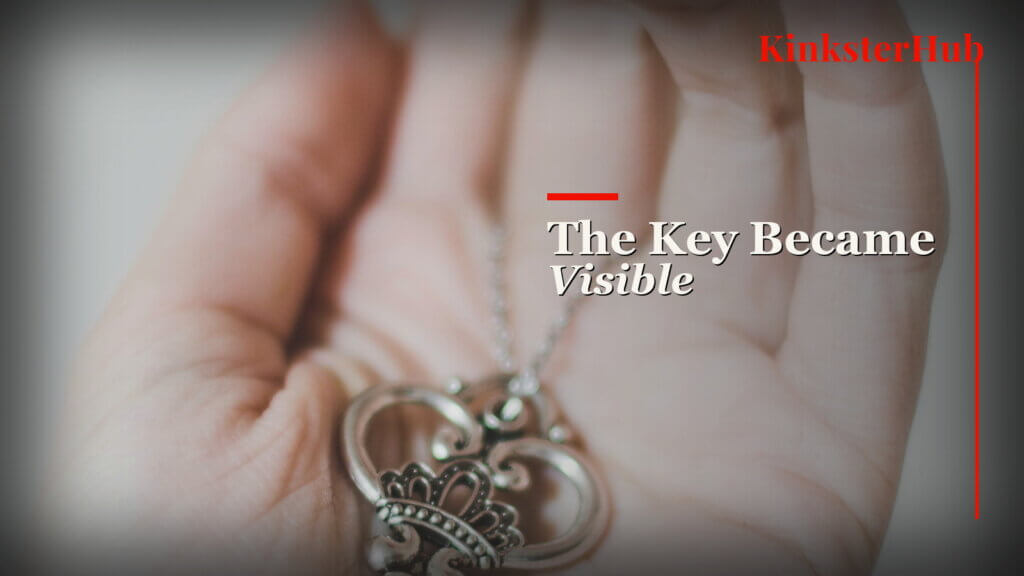
A thin chain rested against her collarbone. At the center of it, small and bright, was the key.
For a second, he forgot how to look casual. He had imagined the key in drawers, pockets, bedside tables, places that belonged to the background of their home. He had not imagined it against her skin, moving when she breathed, visible every time she turned toward him.
“You are staring,” she said.
“No, I am not.”
“You absolutely are.”
She did not cover it. That was the point.
A Keyholder Does Not Need to Explain Herself
At breakfast, she wore it. When she answered emails, she wore it. When she folded laundry, she wore it. The more ordinary the scene, the more impossible it became for him to treat the lock as a temporary bedroom game.
He had read enough about keyholder communication to know that symbols mattered. A rule could live in a note. A decision could live in a locked device. A promise could live in a key worn openly enough to make him careful.
Still, knowing that in theory was different from watching her move through the apartment with his release resting at her throat.
“Is that comfortable?” he asked.
“The necklace? Yes.”
“I meant… wearing it like that.”
She smiled. “Very.”
He Wanted to Touch It
That was the worst part.
He did not only want to be unlocked. He wanted to touch the key. He wanted to feel its shape and prove to himself it was still an object, not a spell she had placed over the whole day.
But every time his hand drifted toward her, he remembered the rules. Ask once. Accept the answer. No touching what belonged to her unless she allowed it.
The key had changed categories. It was no longer a tool for him. It was hers.
She caught his hand halfway across the couch.
“Were you reaching for me,” she asked, “or for this?”
His face warmed.
“Both.”
She laughed quietly and kept his hand in hers, away from the chain.
Permission Felt Different Now
She let him sit close. She let him rest his head against her shoulder. She even let him kiss her once, softly, while the key pressed between them like a private joke.
But when his fingers moved toward the necklace, she stopped him with one word.
“No.”
He froze.
“You can touch me,” she said. “Not the key.”
The distinction went through him with surprising force. She was not rejecting closeness. She was defining it. There was intimacy available to him, but not access. Affection, but not release. Warmth, but not control.
That was when he understood why this belonged in a male chastity play fantasy and not merely a story about a cage. The device mattered, but the real lock was the line she drew and expected him to respect.
She Wore It Out of the Room
Near bedtime, she stood and stretched. The key flashed once under the light.
“Are you going to keep wearing it?” he asked.
She tilted her head.
He corrected himself. “May I ask if you are going to keep wearing it?”
Her expression softened, but the answer did not.
“Yes.”
“Just at home?”
She walked to the bedroom doorway and looked back at him.
“We’ll see.”
He stared after her, locked, quiet, and suddenly aware that the next boundary might not be about time at all. It might be about visibility.
The Necklace Changed the Room
The key did not need to be large to change the atmosphere. It was small enough that someone else might not have noticed it, but he noticed every movement. When she leaned over the sink, it slipped forward. When she laughed, it moved against her chest. When she sat across from him, it rested in the exact place his eyes were trying not to go.
He had thought visual reminders were just a fantasy detail, the kind of thing that looked good in captions and stories. In practice, the key around her neck turned every ordinary conversation into a test of attention. Could he look at her instead of the key? Could he listen when the symbol of his denial was right there?
That made the moment stronger than a speech. She did not need to tell him she was the keyholder. She simply wore the answer.
A Conversation About Visibility
After dinner, he finally asked the question that had followed him all day.
“Do you want me to be nervous when I see it?”
She considered him before answering. “I want you to be aware.”
“That is not the same thing?”
“No. Nervous means you think I might misuse it. Aware means you remember that I am holding something you gave me.”
The distinction settled into him. She was right. The key did not frighten him because he distrusted her. It affected him because he trusted her enough to let it matter.
That was the kind of communication he had seen described in chastity keyholder communication guides, but hearing it from her made it feel less like advice and more like the foundation of their private language.
He Learned a New Boundary
By the end of the day, he understood that the key had its own boundary. He could look. He could ask one careful question. He could tell her honestly what it did to him. But he could not touch it unless she invited him to.
The boundary was small, almost ceremonial, and yet it taught him something important: control became real through repeated respect. Not one grand surrender. Not one intense scene. A hundred quiet moments where he chose not to reach.
That restraint also changed how he understood teasing. The best kind was not loud or constant. It was precise, timed, and connected to trust, the same slow pressure described in chastity tease ideas when anticipation matters more than immediate escalation.
Continue to Part 7: He asks once, and she says no before he can prepare himself.