No Nut November—usually shortened to NNN—is a voluntary internet challenge in which people try to avoid orgasm or ejaculation during November. Some participants treat it as a meme. Others use the month to observe a habit, test a personal rule, or join an online community ritual.
There is no organization in charge of NNN and no rulebook accepted by everyone. That matters because a subreddit’s rules, a friend’s rules, and a health article’s description may all be different. This guide explains what NNN means, how it spread, why people participate, and what current research can—and cannot—tell us.
What Does NNN Mean?
In this context, NNN means “No Nut November.” The word “nut” is informal slang for orgasm or ejaculation. Online, people use the abbreviation for the November challenge, the memes around it, and the communities that track participation.
The shortest useful definition is this: NNN is a self-directed November abstinence challenge. It is not automatically a medical program, a permanent lifestyle, or a requirement to avoid every form of intimacy.
| NNN can be | NNN is not automatically |
|---|---|
| A voluntary internet challenge | A medical treatment or health program |
| A meme and community tradition | A challenge with one universal rulebook |
| A temporary personal experiment | A requirement to avoid all intimacy |
| Something an adult can adapt or decline | A test of masculinity, morality, or personal worth |
This distinction prevents a common mistake: treating the strictest version found online as the only “real” version. People often agree on the month and the general idea while disagreeing on the details.
How No Nut November Became an Internet Challenge
Early references did not create one official program
NNN has a decentralized internet history. Know Your Meme’s NNN archive traces an early Urban Dictionary entry to 2011 and documents wider circulation through meme communities in 2017. That archive is useful for cultural history, but an early post is not the same as a governing charter or proof that one person created every modern version.
The challenge spread through jokes, reposts, videos, image-based rules, and community discussions. Each new community could preserve, simplify, or rewrite what it received. That is why claims about the “original official rules” should be treated cautiously.
The community ritual became part of the meaning
For many participants, NNN is not only about abstinence. It also involves day-one announcements, progress posts, milestone labels, memes, and end-of-month reflections. The social structure makes the challenge feel shared even when participation is private.
A 2026 r/nonutnovember day-one roll-call post tells participants that a simple “Still IN” or “I’m OUT” can be used for check-ins. That wording shows how the community converts a private choice into a visible streak. It is one community’s practice, not evidence that all NNN participants follow the same system.
Why Do People Participate in No Nut November?
People join NNN for different reasons, and the reason often determines whether the experience feels useful, funny, frustrating, or irrelevant.
Community, humor, and curiosity
Some adults participate because the annual memes are familiar and their friends are talking about them. They may be curious about how long they will continue, enjoy the group language, or want to take part in a seasonal online event. In this version, the social experience may matter more than the rule itself.
Habit observation rather than a promised “reset”
Others use the month to notice when they turn to pornography, masturbation, or sexual stimulation. A time-limited pause can create space for observation, but it does not automatically diagnose a problem or “reset” the brain. A more useful question is: What pattern am I trying to understand?
“I want to notice what triggers this habit” is a clearer personal objective than “I need to prove I have enough willpower.” The first creates something to learn; the second can turn an optional challenge into a source of shame.
Personal discipline and streak tracking
Some participants simply enjoy setting a rule and tracking it. That can be meaningful without making completion a measure of character. If the challenge creates distress, conflict, secrecy, or pressure, changing or ending it is a valid outcome—not proof of failure as a person.
Does No Nut November Have Official Rules?
No single set of NNN rules is universally official. Most versions involve avoiding orgasm or ejaculation during November, but communities differ on partnered sex, edging, nocturnal emissions, accidental orgasm, pornography, and so-called free passes.
Some communities publish detailed rules and call them official within that community. Those rules can organize their own event, but they do not create a central authority for everyone using the term “No Nut November.”
Before participating, write down three things:
- what action or habit the rule actually covers;
- why you chose that rule;
- what circumstances mean you will pause, change, or end the challenge.
This keeps an internet meme from making decisions for you. It also prevents arguments created by two people assuming that “NNN” has one obvious definition.
For the shared core, community variations, and common gray areas, use the No Nut November rules guide. Detailed edge cases remain on their assigned supporting pages rather than this definition page.
NNN vs. NoFap, Semen Retention, and Locktober
These terms overlap in online conversations, but they describe different practices and reader intentions.
NNN is tied to November
No Nut November is a seasonal, time-limited internet challenge. The calendar and community event are part of its identity.
NoFap and semen retention are broader ideas
NoFap usually describes a broader effort to avoid masturbation or pornography for a chosen period, not necessarily November. Semen retention centers on avoiding ejaculation and may be presented as a practice, philosophy, or health claim. Claims attached to either term need to be assessed individually rather than imported into NNN as fact.
Locktober comes from a different community context
Locktober is associated more closely with consensual chastity, denial, devices, and sometimes a partner or keyholder. The two challenges can overlap, but they are not interchangeable. Our guide to Locktober and No Nut November compares their goals, mechanisms, and community contexts.
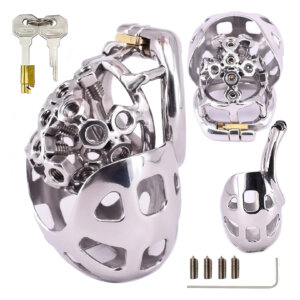
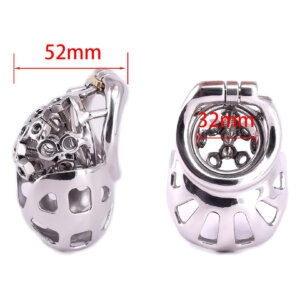
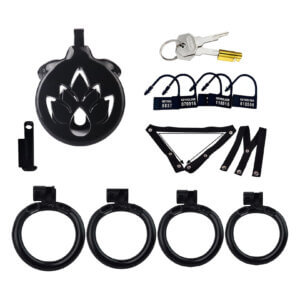
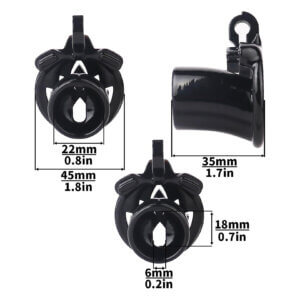
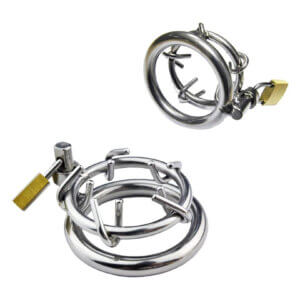
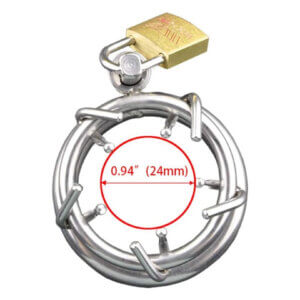
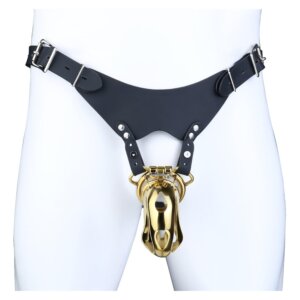
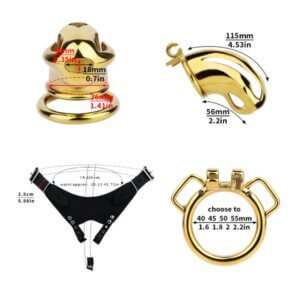
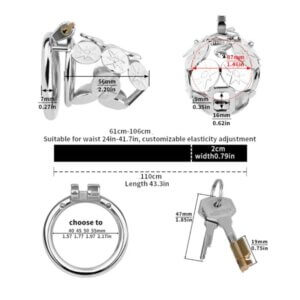
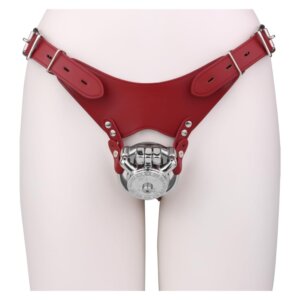
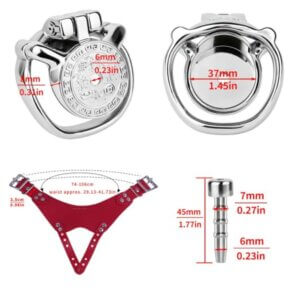
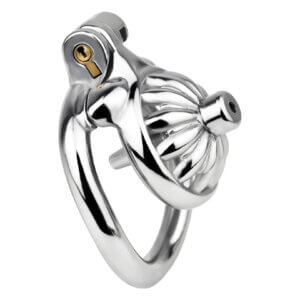
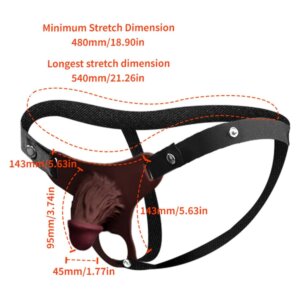
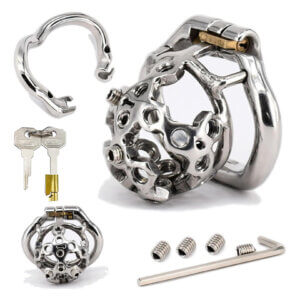
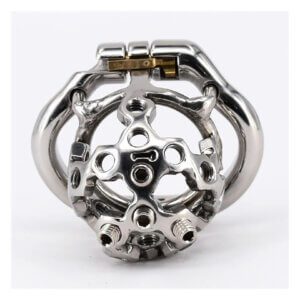
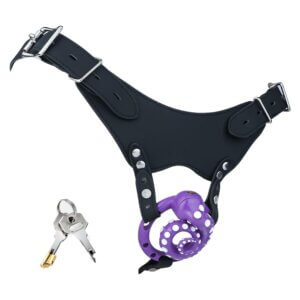
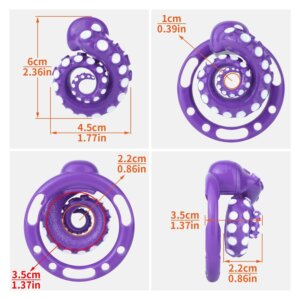
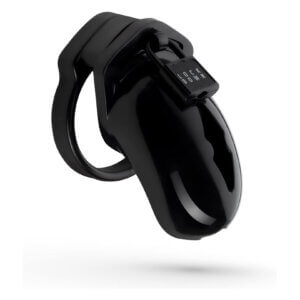
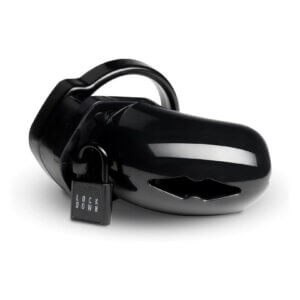
A chastity device is not required for NNN and should not be presented as the default way to participate. If an adult’s actual interest is consensual device-based chastity rather than NNN itself, they can compare chastity cage styles by material, fit, and lock type after reviewing our measurement and fit safety guide, comfort, hygiene, and emergency-removal needs. Adults interested in multiple seasonal events can use the chastity challenge calendar to plan review periods instead of treating one month as an automatic commitment to the next.
What Does Research Say About NNN and Sexual Wellbeing?
NNN is often surrounded by confident claims about testosterone, concentration, confidence, dopamine, or “superpowers.” Personal reports can describe feeling focused, frustrated, energized, distracted, or unchanged, but those experiences do not establish a universal health effect.
A 2025 study in The Journal of Sexual Medicine, indexed by PubMed, surveyed people before and after the challenge. The researchers analyzed data from 435 people at the first time point and 114 at the second. They assessed sexual pleasure, solitary desire, sexual dysfunction, sexual flexibility, and sexual excitation.
Over the abstinence period, the study found no significant differences in the measured sexual-wellbeing outcomes between NNN participants and non-participants. People who had participated reported greater sexual flexibility than those who had never participated, but the authors interpreted this as a possible difference in willingness to try sexual trends or practices—not proof that NNN caused the difference.
The study is useful because direct research on NNN has been limited. It is also a survey with substantial drop-off between its two time points, so it cannot support sweeping claims about every participant or every possible outcome. The careful conclusion is that current evidence does not justify guaranteed benefit or harm claims.
Readers evaluating health claims should use a dedicated evidence review rather than treating community experience as clinical proof.
Conclusion: Understand the Label Before Choosing the Challenge
No Nut November is best understood as a decentralized internet challenge: one shared month, several motivations, and multiple community rule sets. The abbreviation “NNN” tells you the cultural label, but it does not tell you exactly what a person believes, why they joined, or which rules they follow.
If you are considering it, choose the next guide based on the decision you actually face. Read the rules guide for definitions, the myths and evidence review for common claims, the motivation guide for personal reasons, or the first-timer checklist for a realistic plan. Do not let the loudest meme or strictest stranger make that choice for you.
FAQs
What does NNN mean in text?
NNN usually means “No Nut November” when it appears in November memes, challenge posts, or sexual-abstinence discussions. In other contexts, the same abbreviation can mean something else, so surrounding words still matter.
Is No Nut November an official challenge?
NNN is a widely recognized internet challenge, but it is not governed by one official organization. Individual communities may publish rules for their own members without creating a universal standard.
Is NNN the same as NoFap?
No. NNN is a November event, while NoFap usually refers to a broader practice involving masturbation or pornography outside a single month. Some people connect the two, but their goals and rules are not automatically identical.
Do you need a chastity device for NNN?
No. Most descriptions of NNN do not require a device. Anyone considering device-based chastity should treat fit, hygiene, comfort, emergency removal, and consent as separate safety decisions.
Transparency Disclosure
This article uses public community discussions to describe how some people talk about NNN; those posts are individual or community examples, not population-level evidence. Health statements are based on the cited 2025 study and are not medical advice. No product is required to participate, and the challenge is presented as an optional choice for consenting adults.
Related products
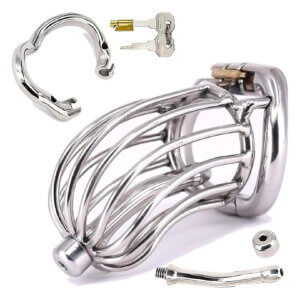 Guide pickAdjustable-Ring Metal Chastity CageAdjustable-ring metal option with selectable fit settings for adults comparing…
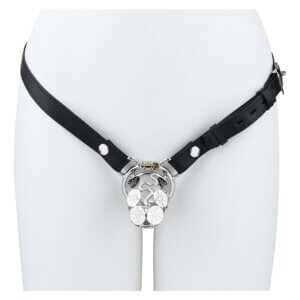 Guide pick2.2-Inch Metal Chastity Cage with BeltBelt-supported metal option with four selectable ring sizes and a built-in key…